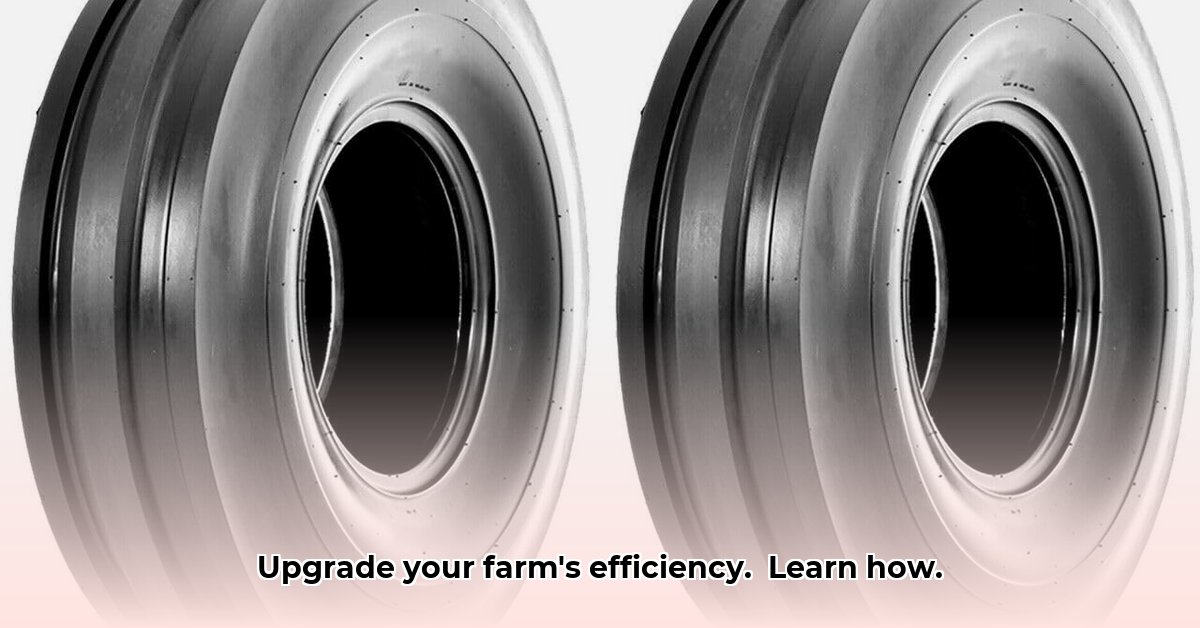
Choosing the right tractor tires significantly impacts your farm's efficiency and environmental footprint. This guide focuses on 6 x 16 tractor tires, providing actionable insights for sustainable farming practices. We'll cover tire selection, maintenance, and future trends, helping you optimize your operations while minimizing soil compaction and fuel consumption. For more information on other tire sizes, check out our guide on 4-00 x 12 tractor tires.
Understanding Your Farming Needs: The Foundation of Tire Selection
Before diving into specifications, assess your farm's unique characteristics. Soil type significantly influences compaction. Heavy clay soils require tires minimizing compaction, while lighter, sandier soils offer more flexibility. What are your primary tractor uses? Heavy hauling demands high load-bearing capacity tires, while light tillage allows for lower PSI ratings. Consider work intensity and frequency – this impacts tire wear and fuel consumption. Prioritize fuel efficiency, maximum traction, or a balance based on your needs.
Don't overlook the importance of responsible tire disposal. Many regions offer tire recycling programs; utilizing them demonstrates a commitment to sustainable practices. Consider this a crucial aspect of long-term farm sustainability.
Decoding 6 x 16 Tractor Tires: Key Specifications
Several key features differentiate 6 x 16 tractor tires:
Load Capacity (PSI): Measured in pounds per square inch, this determines the weight a tire can safely handle. Lower PSI generally reduces soil compaction, benefiting soil health, but higher PSI is needed for heavier loads. Finding the right balance is crucial. What PSI best balances soil health with your workload?
Tread Depth: Deeper treads offer superior traction, especially in wet conditions, preventing slippage and saving fuel. Shallower treads might suffice in drier conditions, but they wear faster. How will your typical weather and soil conditions influence your tread depth choice?
Tire Construction: Radial tires typically provide better fuel efficiency and a smoother ride. Bias-ply tires often offer greater durability. This involves a trade-off based on your priorities. "Some experts believe that the longer lifespan of bias-ply tires outweighs the slightly reduced efficiency for certain operations," says Dr. Anya Sharma, Agricultural Engineer at the University of Nebraska-Lincoln.
Tire Material: Manufacturers are increasingly using sustainable materials like recycled rubber or bio-based compounds to reduce environmental impact. This is an evolving area with many promising developments for the future. Are sustainable tire materials a priority for your operation?
Choosing the Right 6 x 16 Tractor Tires: A Practical Approach
Selecting your tires involves a methodical process:
Analyze Your Soil: Identify your soil type to determine appropriate tire pressure and tread depth.
Determine Your Workload: Assess the typical weights and conditions your tractor handles to select the correct load capacity.
Review Tire Specifications: Carefully examine PSI ratings, tread depth, construction type, and material composition from the manufacturer's specifications.
Compare Total Cost of Ownership: Factor in both initial cost and long-term expenses like fuel consumption and tire lifespan. Higher-quality tires often prove more economical in the long run despite higher initial investment.
Plan for Responsible Disposal: Research and choose a responsible tire disposal method in your area.
Sustainable Tire Practices: Maintenance and Beyond
Proper tire maintenance is crucial for maximizing lifespan and performance:
Maintain Correct Inflation: Regularly check and adjust tire pressure to the manufacturer's recommendations. Underinflation increases fuel consumption and compaction, while overinflation can damage tires and reduce traction.
Regular Inspections: Periodically inspect tires for wear, cuts, or other damage to prevent major problems.
Rotation and Alignment: Ensure even wear and optimal function through regular tire rotation and wheel alignment.
Future Trends in Tractor Tire Technology
The agricultural tire sector is constantly evolving:
Bio-based Materials: Increased use of sustainable materials is reducing the environmental footprint of tire production.
Advanced Tread Designs: Innovations are constantly being introduced to improve fuel efficiency and reduce soil disturbance.
Smart Tire Technology: Real-time tire pressure monitoring systems are becoming more common, enabling constant pressure monitoring for optimal fuel economy and reduced wear.
Comparing Tire Options: A Hypothetical Example
This table illustrates the differences between hypothetical radial and bias-ply 6 x 16 tires. Specific specifications vary by brand and model.
| Feature | Option A (Radial) | Option B (Bias-Ply) |
|---|---|---|
| Load Capacity | 1500 lbs | 1800 lbs |
| Tread Depth | 1.5 inches | 1.2 inches |
| Fuel Efficiency | High | Moderate |
| Cost | Higher | Lower |
| Typical Lifespan | Potentially Longer | Potentially Shorter |
Choosing the right 6 x 16 tractor tires requires a careful evaluation of your specific farming operation's needs and long-term sustainability goals. Consult with tire professionals and stay informed about the latest advancements in tire technology to optimize your farming practices.